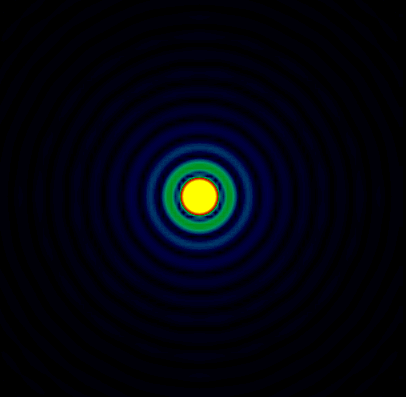
Let us first look at the outcome of diffraction. If we
choose a spherical aperture
we get the following diffraction pattern.
If we tilt the incoming wavefront by mulitplying with a complex phase factor
exp(-i2πx/Δx) exp(-i2πy/Δy)
corresponding to a tilted plane we get the same function but translated
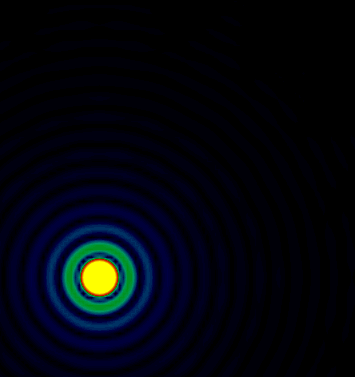
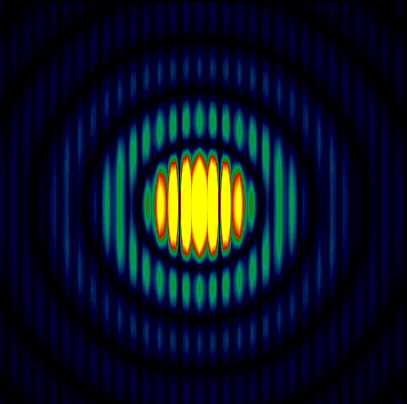
Instead of having one aperture we can introduce two apertures with a distance between the two which is larger than the diameter. We decrease our diameter compared to the first figures.
Using two apertures on a single wavefront produce the following interference pattern.
Next we can take two sources with a distance of a few pixels and look at the image produced using two telescopes (apertures). We do this by multiplying the aperture function with the sum of two complex phase function. We assume equal brightness of the two sources
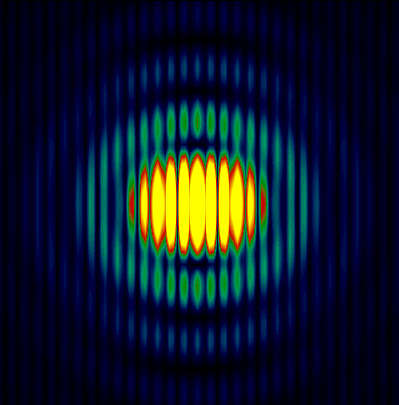
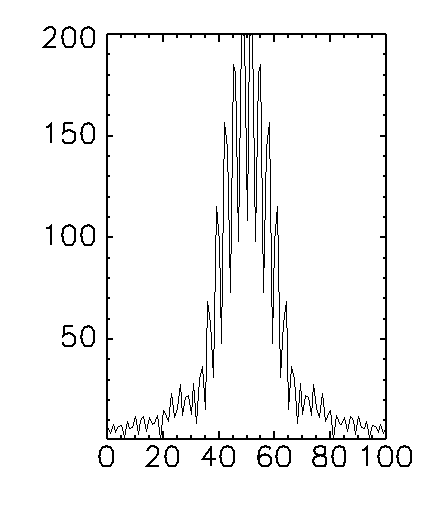
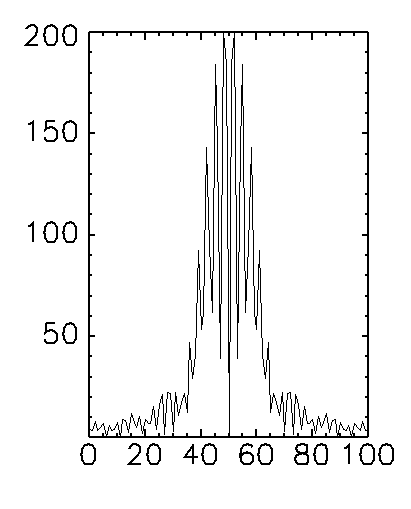
A cut through this image for two different values of the distance between the two sources show the effect of the interference and the fringe contrast.
You can play with a Virtual Radio Interferometer, where you can simulate some of the properties and responses.